
Your sales team is the heartbeat of your growth. It’s the group of people who turn conversations into customers and interest into revenue. So when you set out to hire good salespeople, you’re really building the future of your business, one thoughtful decision at a time.
Let’s walk through how to hire salespeople with care, and how to build a sales team that stays motivated, connected, and consistently successful.
Start by Defining Your Ideal Sales Candidate
Before you post a single job listing, take a moment to picture the person you want on your team. The clearer your vision, the easier the hiring journey becomes.
Consider the traits that matter most for your specific business. A great salesperson isn’t only someone who talks well. They listen, they stay curious, and they genuinely care about solving problems.
Traits Worth Looking For
- Resilience. Rejection is part of the job, and the right person bounces back with grace.
- Coachability. Someone open to feedback grows faster and fits your culture better.
- Empathy. People buy from those who understand them, so emotional awareness is gold.
- Drive. Look for a natural hunger to hit goals and keep improving.
Think about the experience level you truly need, too. A seasoned closer and an eager newcomer bring different strengths. Both can shine when placed in the right role.
Key Steps for Hiring Salespeople
Once you know who you’re looking for, the hiring process becomes a series of gentle, deliberate steps. Each one helps you get closer to the right fit.
Write a Job Description That Speaks Honestly
Your job post is your first conversation with a candidate. Describe the role, the rewards, and the expectations clearly. When you’re upfront about goals and compensation, you attract people who are ready for the work.
Use Practical Interviews
Traditional interviews only tell you so much. Consider adding a role-play or a mock pitch to see how candidates think on their feet. You’ll learn far more from watching someone sell than from hearing them describe how they sell.
Check References With Purpose
Don’t be afraid to dig a little deeper during reference checks. Ask former managers about work ethic, teamwork, and how the person handled tough quarters. These small conversations often reveal the biggest insights.
Onboarding and Training That Sets People Up to Win
Hiring is only the beginning. The way you welcome new team members shapes how quickly they succeed.
A warm, structured onboarding tells your new hire they belong. It also gives them the tools and confidence to start strong.
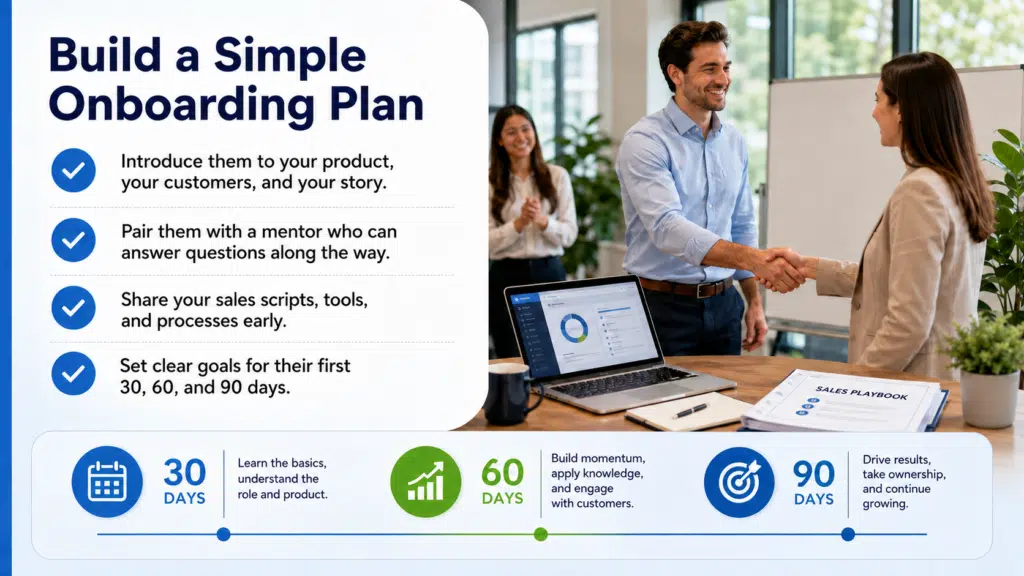
Build a Simple Onboarding Plan
- Introduce them to your product, your customers, and your story.
- Pair them with a mentor who can answer questions along the way.
- Share your sales scripts, tools, and processes early.
- Set clear goals for their first 30, 60, and 90 days.
Training shouldn’t stop after the first week. Ongoing coaching keeps skills sharp and morale high. When you invest in your people, they invest right back into your business.
Nurture a Team Culture People Want to Stay In
Your culture is the feeling people carry with them each day. A supportive, energized team environment keeps your best salespeople engaged for the long haul.
Celebrate wins together, big and small. Encourage open communication so challenges get solved before they grow. When your team trusts each other, collaboration replaces competition, and everyone performs better.
Recognition matters more than you might expect. A simple thank-you, a shout-out in a meeting, or a shared milestone can lift the whole room.
Measure Performance With Clear Metrics
You can’t grow what you don’t measure. Tracking the right numbers helps you support your team and spot opportunities early.
Metrics Worth Watching
- Conversion rate. How many leads turn into customers?
- Average deal size. Are your reps closing meaningful business?
- Sales cycle length. How long does it take to move from first touch to close?
- Activity levels. Calls, emails, and meetings show effort and consistency.
Share these metrics openly with your team. When people understand the goals, they take ownership of the results. Use the numbers to coach, not to criticize.
When to Consider Outsourcing Your Sales Team
Building an in-house team is rewarding, but it isn’t always the right first step. Sometimes your goals grow faster than your capacity to hire. That’s where outsourcing sales can offer a helpful path forward.
An outsourced sales approach lets you tap into trained professionals without the long ramp-up of building everything yourself. It’s a flexible way to grow while you focus on your core business.
Why Small Businesses Choose to Outsource
Outsourcing sales for small business owners can ease real pressure. Hiring, training, and managing a full team takes time and money you may not have yet.
A sales outsourcing company brings ready expertise, systems, and people. With the right sales outsourcing services, you gain momentum quickly and keep your overhead lighter.
B2B Sales Outsourcing as a Growth Partner
If you sell to other businesses, b2b sales outsourcing can be especially valuable. Specialized teams already understand complex buying cycles and longer conversations.
Think of outsourcing your sales team as a partnership rather than a handoff. You stay involved in strategy while experienced partners handle the day-to-day selling. Many companies blend both models, keeping a small in-house team while an outsourced partner extends their reach.
Bringing It All Together
Learning how to build a sales team is a journey of steady, caring choices. You define the right people, welcome them warmly, coach them often, and measure progress with honesty.
And when the moment feels right, don’t be afraid to explore outsourcing sales as a way to grow with confidence. Whether you build in-house, partner with a sales outsourcing company, or combine both, you’re creating something lasting.
Your team is your story. Take your time, lead with heart, and watch your high-performing team come to life.